Monday, October 5, 2020

President Buhari approves special salary scale for teachers in Nigeria.

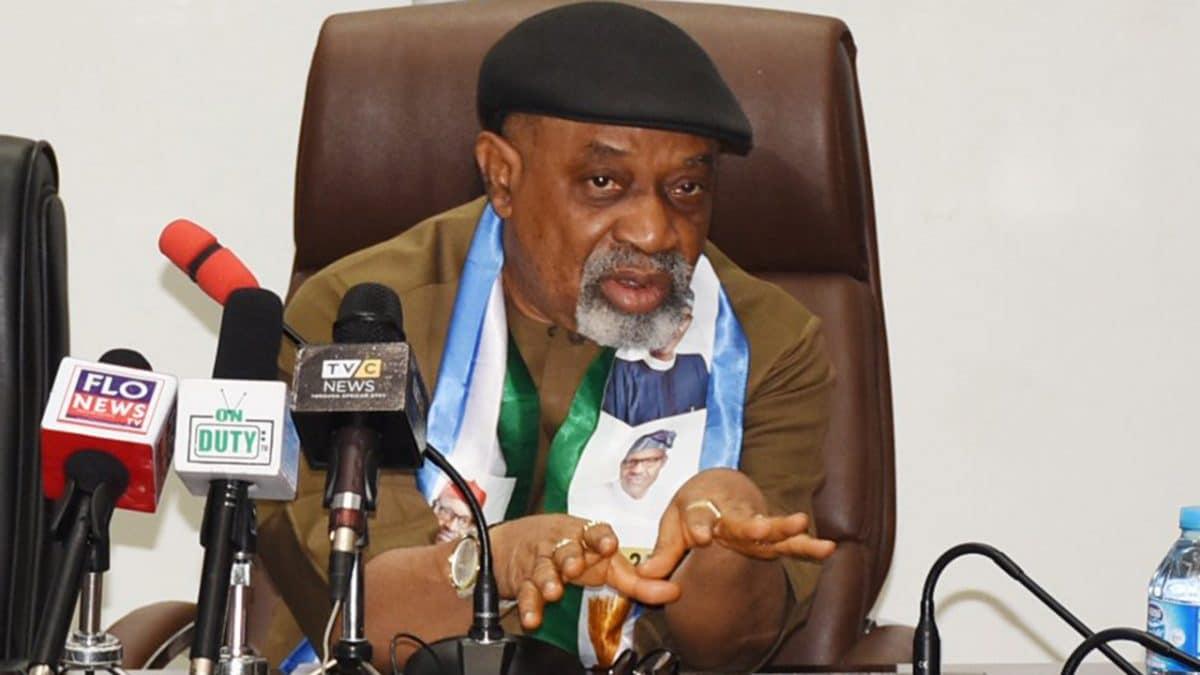
Nigeria News Local news LOCAL NEWSEDUCATION President Buhari approves special salary scale for teachers in Nigeria 20 minutes ago 3119 views by  Oluwatobi Bolashodun - A special salary scale for teachers across the nation has been approved by President Buhari - Adamu Adamu, the minister of education, made the disclosure on Monday, October 5 - The president also increased the number of years of service for teachers to 40 President Muhammadu Buhari has approved a special salary scale for Nigerian teachers in commemoration of World Teachers Day on Monday, October 5. This announcement was made by Adamu Adamu, the minister of education, in a speech he read while representing the president at the celebration of the 2020 World Teachers Day. ThisDay reports that the Nigerian leader also increased the service years for teachers from 35 to 40 years. According to Adamu, the implementation of the new salary scheme is to encourage teachers in delivering better service President Buhari approves special salary for Nigerian teachers. Photo credit: Vanguard Source: UGC Earlier, ruky9ja.com reported that seven months after closing its schools across the country in order to contain the spread of the novel coronavirus pandemic, the federal government announced October 12, for the full reopening of 104 Unity Schools in Nigeria. The news was broken on Friday, October 2, by the minister of education, in Abuja while explaining that the COVID-19 curve has been flattened. 
The minister said state governments and private school owners across the country, are, however at liberty to fix resumption dates and ensure that there are adequate safety measures while doing so. Adamu also warned that schools who fail to adhere to outlined COVID-19 safety protocols, risk closure if there is an outbreak from such learning facilities. However, the Academic Staff Union of Universities (ASUU) reacted to the federal government's directives for the full reopening of all schools in Nigeria including tertiary institutions and unity colleges. The body's president, Professor Biodun Ogunyemi, on Friday, October 2, said institutions cannot reopen because ASUU is still on strike. Ogunyemi, who noted that the federal government has the right to reopen, however, stated that lecturers will continue to withhold their service. Read more: https://www.ruky9ja.blogspot.com/president-buhari-approves-special-salary-teachers.html

Thursday, October 1, 2020

NEWSNigeria at 60: Buhari announces new price for petrol, gives reasons

Buhari said fuel would now be sold at N161 per liter in Nigeria, noting that other nations such as Ghana, Niger, Chad, Saudi Arabia and other oil-producing countries sell petrol on higher prices than Nigeria.

He lambasted the previous governments from 1999 to 2015 for criticizing his administration when they allegedly presided over the near-destruction of the country.

Buhari, in his nationwide broadcast to mark the Independence Day celebration, said no government in the past did what his administration is doing with such scarce resources.

Buhari said his government has managed to keep things going despite the disproportionate spending on security.

He said that the past administrations lack the effrontery to criticize the current administration because they had the opportunity to develop and take the country to a greater height.

“Those in the previous Governments from 1999 – 2015 who presided over the near destruction of the country have now the impudence to attempt to criticize our efforts,” he said.

Buhari said that in the circumstances, a responsible government must face realities and take tough decisions.

“Petroleum prices in Nigeria are to be adjusted. We sell now at N161 per litre. A comparison with our neighbours will illustrate the point

Buhari said fuel would now be sold at N161 per liter in Nigeria, noting that other nations such as Ghana, Niger, Chad, Saudi Arabia and other oil-producing countries sell petrol on higher prices than Nigeria.

He lambasted the previous governments from 1999 to 2015 for criticizing his administration when they allegedly presided over the near-destruction of the country.

Buhari, in his nationwide broadcast to mark the Independence Day celebration, said no government in the past did what his administration is doing with such scarce resources.

Buhari said his government has managed to keep things going despite the disproportionate spending on security.

He said that the past administrations lack the effrontery to criticize the current administration because they had the opportunity to develop and take the country to a greater height.

“Those in the previous Governments from 1999 – 2015 who presided over the near destruction of the country have now the impudence to attempt to criticize our efforts,” he said.

Buhari said that in the circumstances, a responsible government must face realities and take tough decisions.

“Petroleum prices in Nigeria are to be adjusted. We sell now at N161 per litre. A comparison with our neighbours will illustrate the point;

“Chad which is an oil producing country charges N362 per litre.

“Niger, also an oil producing country sells 1 litre at N346.

” In Ghana, another oil producing country, petroleum pump price is N326 per litre.

“Further afield, Egypt charges N211 per litre. Saudi Arabia charges N168 per litre. It makes no sense for oil to be cheaper in Nigeria than in Saudi Arabia.

Buhari noted that for the country to grow and achieve great things Nigerians need to solidify their strength, increase their commitment and encourage themselves to do that which is right.

Recall that the Nigerian government through the Petroleum Products Marketing Company (PPMC) had announced a https://ruky9ja.com/2020/09/02/breaking-buhari-govt-increases-petrol-price-to-n151-56-per-litre/

Email us @ ruky9ja@gmail.com

Follow us one Facebook @ ruky9ja.com

Contact us on WhatsApp @ 08150661608

Youtube@ ruky9ja.com

NigeriaAt60: Buhari’s Independence Day Speech (FULL TEXT)

President Muhammadu Buhari Thursday addressed Nigerians on the occasion of the country’s 60th Independence Anniversary.

The president spoke about the country’s history as well as diverse issues like the economy and identity.

Read the full speech by the president below.

INDEPENDENCE DAY ADDRESS BY HIS EXCELLENCY, MUHAMMADU BUHARI, PRESIDENT OF THE FEDERAL REPUBLIC OF NIGERIA ON THE OCCASION OF NIGERIA’S SIXTIETH INDEPENDENCE ANNIVERSARY, THURSDAY 1ST OCTOBER 2020

Fellow Nigerians

I speak to you today as your President and fellow citizen on this epoch occasion of our country’s 60th independence Anniversary. As President, I wish to renew my appreciation to Nigerians for entrusting me with your hopes and aspirations for a better and greater Nigeria.

2. Today, it is my unique privilege to re-commit myself to the service of this great country of great people with profound diversities and opportunities. We are bound by destiny to be the largest and greatest black nation on earth.

3. At this stage in our nationhood it is important that we reflect how we got here to enable us work TOGETHER to get to where we aspire to be as a strong indivisible nation, united in hope and equal in opportunity.

4. On October 1st 1960 when Prime Minister Alhaji Abubakar Tafawa Balewa received the constitutional instruments symbolizing Nigeria’s independence, he expressed his wish that having acquired our rightful status as an independent sovereign nation, history would record that the building of our nation proceeded at the wisest pace.

5. This optimism was anchored on the peaceful planning, full and open consultation and harmonious cooperation with the different groups which culminated in Nigeria emerging as a country without bitterness and bloodshed.

6. Our founding fathers understood the imperative of structuring a National identity using the power of the state and worked towards unification of Nigerians in a politically stable and viable entity.

7. That philosophy guided the foundation that was laid for our young nation of 45 million people with an urban population of approximately 7million occupying an area of 910,768 square kilometers. These demographics led to development challenges for which major efforts were made to overcome.

8. Today, we grapple with multiple challenges with a population exceeding 200million occupying the same land mass but 52% residing in urban areas.

9. Sixty years of nationhood provides an opportunity to ask ourselves questions on the extent to which we have sustained the aspirations of our founding fathers. Where did we do the right things? Are we on course? If not where did we stray and how can we remedy and retrace our steps?

10. Upon attaining independence, Nigeria’s growth trajectory was anchored on policies and programmes that positively impacted on all sectors of the economy. However, this journey was cut short by the 30-months of civil war.

11. We came out of the civil war with a focus on reconstruction, rehabilitation and reconciliation that enabled the country to put in place world class development structures and a strengthened public service that well served the government. This positive trajectory continued with a return to democratic government which was truncated by another round of military rule.

12. For a cumulative 29 of our 60 years existence as a nation, we have been under military rule.

13. My summary of our journey so far as a nation is necessary to appropriately chart where we need to go and how to get there TOGETHER.

14. Today, I am aware that our economy along with every single economy in the world is in crisis. We still face security challenges in parts of the country, while our society suffers from a high loss of moral rectitude which is driven by unbridled craving for political control.

15. An underlying cause of most of the problems we have faced as a nation is our consistent harping on artificially contrived fault-lines that we have harboured and allowed unnecessarily to fester.

16. In addition, institutions such as civil service, police, the judiciary, the military all suffered from a general decline.

17. We need to begin a sincere process of national healing and this anniversary presents a genuine opportunity to eliminate old and outworn perceptions that are always put to test in the lie they always are.

18. The stereotype of thinking of ourselves as coming from one part of the country before seeing ourselves as Nigerians is a key starting point to project us on the road to our deserved nation’s evolution and integration.

19. To start this healing process, we are already blessed with the most important asset any nation requires for such – OUR PEOPLE – and this has manifested globally in the exploits of Nigerians in many fields.

20. It has been demonstrated time and time again that Nigerians in the diaspora frequently excel in science, technology, medicine, sports, arts and many other fields.

21. Similarly, the creativity, ingenuity and resourcefulness of the Nigerian at home have resulted in globally recognized endeavours.

22. I am convinced that if we pursue our aspirations TOGETHER we would be able to achieve whatever we desire. That informed our adopting the theme TOGETHER to mark this epochal event.

23. Together we can change our condition for the better and more importantly, together we can do much more for ourselves and for our country.

24. I chose the path of self-reflection because this is what I do on a daily basis and I must confess that at most times, I always felt the need for a collective reflection as I know that the foundation for a solid future which this administration is laying can only be sustainable if there is a collective commitment by Nigerians.

25. Nigeria is not a country for Mr. President, any ruling or opposition party but a country for all of us and we must play our part, irrespective of challenges we face, to make this country what we desire.

26. To achieve this, we must focus our minds, TOGETHER as a people, on ways of resolving the identified critical challenges that underlie our present state. These include:

a. Evolving and sustaining a democratic culture that leaves power in the hands of the people;

b. Supporting the enthronement of the rule of law, demanding accountability of elected representatives and contributing to good governance;

c. Increasing our commitment to peaceful co-existence in a peaceful, secure and united Nigeria;

d. Harnessing and Optimizing our tremendous human and natural resources to attain our goal of being in the top twenty economies of the world and in the process;

e. Lifting 100 million Nigerians out of poverty in 10 years;

f. Strengthening institutions to make them stronger in protecting National Interests; and

g. Imbibing tolerance in diversity.

27. I am a firm believer in transparent, free, fair and credible elections as has been demonstrated during my period as a democratically elected President.

28. The recent build-up and eventual outcome of the Edo State elections should encourage Nigerians that it is my commitment to bequeath to this country processes and procedures that would guarantee that the people’s votes count.

29. The problems with our electoral process are mainly human induced as desperate desire for power leads to desperate attempts to gain power and office.

30. Democracy, the world over and as I am pursuing in Nigeria, recognizes the power of the people. However, if some constituencies choose to bargain off their power, they should be prepared for denial of their rights.

31. This call is made more urgent if we realise that even after a transparent, free, fair and credible election, desperation leads to compromising the judiciary to upturn legitimate decisions of the people.

32. It is necessary to, therefore support the enthronement of the rule of law by avoiding actions which compromise the judiciary.

33. Fellow Nigerians, our history has shown that we are a people that have the capacity to live peacefully with one another.

34. As a government, we remain committed to our constitutional oath of securing the lives and properties of the citizenry. I, however, call on the citizenry to also support government by providing the necessary community level intelligence in addressing these challenges.

35. In moving forward together, it is important to strengthen our economy to provide sustainable means of livelihood for as many Nigerians as possible so as to eradicate absolute poverty from our midst.

36. I want to re-emphasize my dedication and commitment, a dedication and commitment that propelled my public service career and informed my quest to continually seek for an opportunity to improve the lives of Nigerians, set the country on the path of prosperity and lead the country to a better future.

37. This administration has been focused on rebuilding and laying the foundations for a sustainable Nigeria. Of course, we have met and are still meeting the challenges inherent in any rebuilding initiative – more so that of a nation like Nigeria that has undergone avoidable levels of deprivation – but can be surmounted if we all work together.

38. I wish to re-iterate that our people and our spirit of excellence remains our most important asset.

39. In this wise, the need to return to our age-old ethical and high moral values would be necessary and this informed my launching of the National Ethics and Integrity Policy on Monday 28th September, 2020.

40. The policy would not implement itself and the first contact of the visibility of its implementation is the Public Service whose on-going reforms would be expected to be sustainable and give a radical re-direction in providing services to all Nigerians.

41. Fellow Nigerians, in addition to public health challenges of working to contain the spread of the Coronavirus, we have suffered a significant drop in our foreign exchange earnings and internal revenues due to 40 per cent drop in oil prices and steep drop in economic activities, leading to a 60 per cent drop in government revenue.

42. Our government is grappling with the dual challenge of saving lives and livelihoods in face of drastically reduced resources.

43. In this regard, sustaining the level of petroleum prices is no longer possible. The government, since coming into office has recognized the economic argument for adjusting the price of petroleum. But the social argument about the knock-on effect of any adjustment weighed heavily with the government.

44. Accordingly, in the last three years, we have introduced unprecedented measures in support of the economy and to the weakest members of our society in the shape of:

a. Tradermoni

b. Farmermoni

c. School Feeding Programme

d. Job creation efforts

e. Agricultural intervention programmes

45. No government in the past did what we are doing with such scarce resources. We have managed to keep things going in spite of the disproportionate spending on security. Those in the previous Governments from 1999 – 2015 who presided over the near destruction of the country have now the impudence to attempt to criticize our efforts.

46. In the circumstances, a responsible government must face realities and take tough decisions.

47. Petroleum prices in Nigeria are to be adjusted. We sell now at N161 per litre. A comparison with our neighbours will illustrate the point;

a. Chad which is an oil producing country charges N362 per litre

b. Niger, also an oil producing country sells 1 litre at N346.

c. In Ghana, another oil producing country, petroleum pump price is N326 per litre.

48. Further afield, Egypt charges N211 per litre. Saudi Arabia charges N168 per litre. It makes no sense for oil to be cheaper in Nigeria than in Saudi Arabia.

49. Fellow Nigerians, to achieve the great country we desire, we need to solidify our strength, increase our commitment and encourage ourselves to do that which is right and proper even when no one is watching.

50. Fellow Nigerians, let us collectively resolve to continue our journey beyond the sixty years on the clear understanding that as a nation we are greater together than being smaller units of nationalities. By the special grace of God we shall come through any transient challenges.

51. It is my sincere hope that by the end of this anniversary on September 30th 2021, we will all be proud of taking this individual and collective self-assessment for the progress of our great Nation.

Long Live the Federal Republic of Nigeria.

God Bless us all. Thank you.

Email us @ ruky9ja@gmail.com

Follow us one Facebook @ ruky9ja.com

Contact us on WhatsApp @ 08150661608

Youtube@ ruky9ja.com

Happy Independence from ruky9ja.com

The Federation of Nigeria was granted full independence on 1 October 1960 under a constitution that provided for a parliamentary government and a substantial measure of self-government for the country's three regions. From 1959 to 1960, Jaja Wachuku was the First Nigerian Speaker of the Nigerian Parliament, also called the "House of Representatives." Jaja Wachuku replaced Sir Frederick Metcalfe of Britain. Notably, as First Speaker of the House, Jaja Wachuku received Nigeria's Instrument of Independence, also known as Freedom Charter, on 1 October 1960, from Princess Alexandra of Kent, the Queen's representative at the Nigerian independence ceremonies. Queen Elizabeth II was monarch of Nigeria and head of state, and Nigeria was a member of the British Commonwealth of Nations. The Federal government was given exclusive powers in defence, foreign relations, and commercial and fiscal policy. The monarch of Nigeria was still head of state but legislative power was vested in a bicameral parliament, executive power in a prime minister and cabinet, and judicial authority in a Federal Supreme Court. Political parties, however, tended to reflect the makeup of the three main ethnic groups. The Nigerian People's Congress (NPC) represented conservative, Muslim, largely Hausa and Fulani interests that dominated the Northern Region. The northern region of the country, consisting of three-quarters of the land area and more than half the population of Nigeria. Thus the North dominated the federation government from the beginning of independence. In the 1959 elections held in preparation for independence, the NPC captured 134 seats in the 312-seat parliament.

Capturing 89 seats in the federal parliament was the second-largest party in the newly independent country the National Council of Nigerian Citizens (NCNC). The NCNC represented the interests of the Igbo- and Christian-dominated people of the Eastern Region of Nigeria. and the Action Group (AG) was a left-leaning party that represented the interests of the Yoruba people in the West. In the 1959 elections, the AG obtained 73 seats.

The first post-independence national government was formed by a conservative alliance of the NCNC and the NPC. Upon independence, it was widely expected that Ahmadu Bello the Sardauna of Sokoto, the undisputed strong man in Nigeria who controlled the North, would become Prime Minister of the new Federation Government. However, Bello chose to remain as premier of the North and as party boss of the NPC, selected Sir Abubakar Tafawa Balewa, a Hausa, to become Nigeria's first Prime Minister.

The Yoruba-dominated AG became the opposition under its charismatic leader Chief Obafemi Awolowo. However, in 1962, a faction arose within the AG under the leadership of Ladoke Akintola who had been selected as premier of the West. The Akintola faction argued that the Yoruba peoples were losing their pre-eminent position in business in Nigeria to people of the Igbo tribe because the Igbo-dominated NCNC was part of the governing coalition and the AG was not.The federal government Prime Minister, Balewa agreed with the Akintola faction and sought to have the AG join the government. The party leadership under Awolowo disagreed and replaced Akintola as premier of the West with one of their own supporters. However, when the Western Region parliament met to approve this change, Akintola supporters in the parliament started a riot in the chambers of the parliament.Fighting between the members broke out. Chairs were thrown and one member grabbed the parliamentary Mace and wielded it like a weapon to attack the Speaker and other members. Eventually, the police with tear gas were required to quell the riot. In subsequent attempts to reconvene the Western parliament, similar disturbances broke out.Unrest continued in the West and contributed to the Western Region's reputation for, violence, anarchy and rigged elections. federal Government Prime Minister Balewa declared martial law in the Western Region and arrested Awolowo and other members of his faction charged them with treason. Akintola was appointed to head a coalition government in the Western Region. Thus, the AG was reduced to an opposition role in their own stronghold.

Thursday, September 10, 2020

NEWSBuhari Govt Reach Agreement With Resident Doctors


Buhari

The Muhammadu Buhari-led federal government has reached an agreement with the National Association of Resident Doctors (NARD).

Naija News reports that resident doctors on Monday commenced a nationwide strike over the federal government’s failure to meet their demands.

The industrial action by the NARD is the latest in a string of strikes by medics to hit Africa’s most populous nation as it struggles to curb the spread of the coronavirus.

NARD stated that their demands which the federal government had failed to meet include a pay rise, better welfare, and adequate facilities.

“We have kicked off the strike today,” NARD president Aliyu Sokomba told AFP, adding that medics treating virus cases would join the action this time around.

But the federal government and doctors on Wednesday reached an agreement over the ongoing strike.

At a meeting which lasted almost the entire day, the association said it will consult its executive council within the next 24 hours, with a view to calling off the strike by Thursday.

The Federal Government stated that eight of the demands made by NARD had been addressed and the remaining two were in different stages of being resolved.

After extensive deliberations, however, both parties reached several agreements.

They agreed that the Hospitals and Isolation Centres now have sufficient Provision of Personal Protective Equipment (PPE).

They also agreed that the Federal Government had paid the total sum of Nine Billion Three Hundred Million Naira (N9.3billion) to Insurance Companies for Life Group Insurance and payment of death benefits for health workers.

On the implementation of the payment of the special hazard/inducement allowance, the doctors said they were satisfied that the N20 billion already appropriated in the 2020 COVID-19 Budget has been exhausted to N19 billion and therefore, praised the Federal Government and the President for approving an additional (N8,901,231,773.55) to pay up the large chunk of the June 2020 COVID-19 allowance to all Medical Health Workers.

Among several other agreements, it was also agreed upon that nobody will be victimized for any activity connected with or for participating in the industrial action.

Outburst Over Fuel Price Increase Understandable But Misplaced, Says NNPC GMD

The Group Marketing Director of the Nigerian National Petroleum Corporation (NNPC), Mele Kyari, has dismissed the criticism that followed the recent fuel price increase.
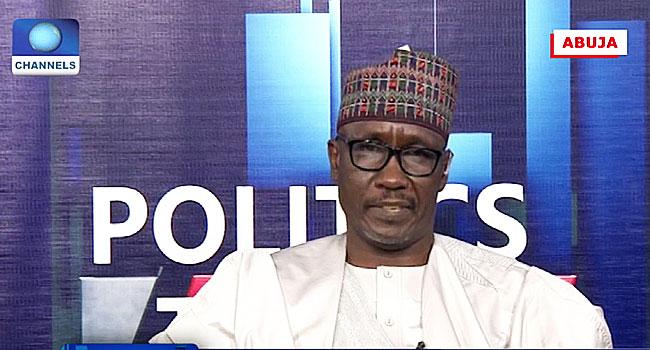
“The outburst is very understandable but I also believe very strongly that it is misplaced because Nigerians are not aware of the opportunities lost,” he said during an interview on Channels Television’s Politics Today on Wednesday.

According to Kyari, the issue of subsidy has been a big issue in the country for many years but the government can no longer afford it because of the economic issues facing the country.

“And not only that, every corruption that you are aware of in the downstream industry is one way or the other connected to fuel subsidy,” the NNPC boss added.

Kyari is the latest government official to defend the decision to fully halt subsidy, a decision that saw the price of fuel surge from N48/litre to N60-61/litre drawing criticism from organised labour, the opposition and many Nigerians.


But the NNPC boss insists it is the right decision.

“It requires courage to make this decision, I can share this with you. Only a Buhari regime can make this decision,” he said, insisting the move would pay off in the long run.

Read Also: Market Forces To Now Determine Price Of Petrol, FG Reiterates

According to the NNPC boss, contrary to what most people believe, subsidy is something that is beneficial only to the rich, not the average man.

“The subsidy in itself, is by every means an elitist thing and I can share this with you. It is only the elite that will have three, four, five cars in their houses, fill their tanks and also feel comfortable doing this.

“The ordinary man is not the beneficiary. First, he loses in infrastructure, hospitals are not built, schools are not built and ultimately, the brunt of the corruption in the downstream sector will be transferred to the ordinary man. So, overall, you lose everything.

“It is very understandable for people to get angry that prices have gone up. Just like the prices of every commodity, when it goes up, there can be difficulties and challenges that people will naturally face but once prices go up, the other natural thing that must happen is that your income needs to increase so that you are able to procure the things that are now delivered at higher prices.

“You can’t do this anywhere in the world if there is no productivity.

“And there will be no productivity except there is growth in infrastructural development, industries are able to work, therefore, there is a connection between production and consumption. What subsidy does is to remove that connection.

“When people get angry, this is coming from people who, practically are not aware of this situation and they are not aware of the loss that they have and most importantly they are being engineered into making those statements, and we understand this perfectly.

“We are the national oil company, it’s our role to ensure energy security. But you can’t do this until you are able to deliver cost. And that cost is lost daily as prices of crude oil goes up and you are unable to do many things”.

Plans for refineries

On the state of the nation’s refinery, Mr Kyari explained that plans are on the way to rehabilitate the four major refineries to maximum capacity.

According to him, this plan is expected to place Nigeria as the world’s biggest exporter of oil in the next three years.

Fuel price was increased on Wednesday last week for the second time this year after being reduced to N123.50 in April as coronavirus-induced lockdowns crashed global oil prices.

As economies across the world reopened and the price bounced back, the retail price in Nigeria shot back up to N148 in August before the latest increase.

Although the increase in fuel price has sparked outrage with various groups holding nationwide protests across the country, the Federal Government has stood by its decision.

On Tuesday, the Petroleum Products Pricing Regulatory Agency (PPPRA) said it was no longer going to be releasing price bands for the sale of Premium Motor Spirit (PMS/petrol) at filling stations.

The agency reiterated that the price will now be fully based on the forces of demand and supply.

“It is based on bargain power,” the General Manager (Admin and Human Resources) of the PPPRA, Victor Shidok, said. “It is based on where you source your products.”

However, he noted that the government will ensure customers are protected from price-gouging and other ills associated with free markets.

“You could have a regulator that always stand and remain a watchdog to see how these forces are being played out, how the interest if both operators and consumers are being taken care of,” he said.

www.ruky9ja.com

Buhari Inaugurates Committee To Lift 100m Nigerians Out Of Poverty, Boost Development

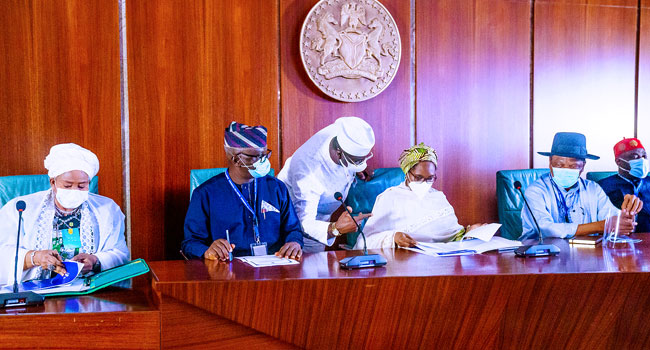
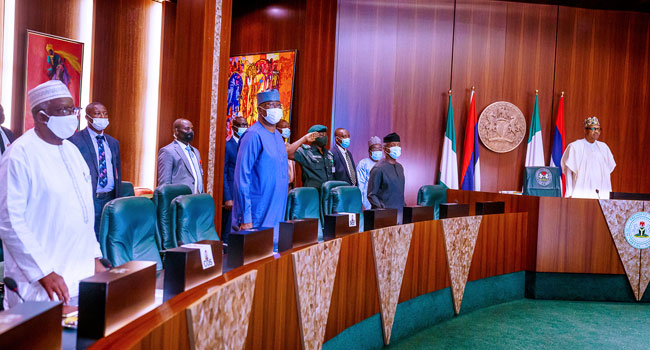
President Muhammadu Buhari on September 9, 2020 inaugurated the National Steering Committee to lift 100 million Nigerians out of poverty in the next 10 years. Credit: Presidency


President Muhammadu Buhari has inaugurated the National Steering Committee to oversee Nigeria’s Agenda 2050.

The committee is to ensure that the Medium-Term National Development Plan (MTNDP) succeeds the Vision 20:2020 and the Economic Recovery and Growth Plan (ERGP) 2017 – 2020.

The team will be jointly chaired by Mr Atedo Peterside and the Minister of Finance, Budget and National Planning, Zainab Ahmed.

Part of the task before the group is to lift 100 million Nigerians out of poverty within the next 10 years.

“The main objectives of these Successor Plans are to lift 100 million Nigerians out of poverty within the next 10 years, particularly given the World Bank’s projection that Nigeria will become the world’s third most populous country by 2050 with over 400 million people,” President Buhari said.


For Buhari, it had become necessary to develop successor plans to the Nigeria Vision 20:2020 and the ERGP, which will lapse in December, to ensure continuity and efficiency in the country’s development planning.

On the mandate of the members, President Buhari said it would oversee governance structure comprising the Central Working Group and 26 Technical Working Groups for the important national assignment.

“It is my expectation that the Steering Committee will oversee the execution of key deliverables, including recommending measures to ensure the continuous implementation of the Plans even after the expiration of the tenure of successive Administrations – including legislation, if required.


“Such legislation may introduce much-needed rigour and discipline to the nation’s development planning as well as institutionalise planned outcomes for the future. I trust that our partners in the National Assembly will support us in exploring these reforms,” he said.

While asking members not to lose sight Nigeria’s role globally, President Buhari said the Successor Plans must, therefore, be designed to sustain national development, support regional and global strategic interests, as outlined in the African Union Agenda 2063, the ECOWAS Integration Agenda 2050 and the Sustainable Development Goals 2030.

Featured Post

Labour Party clears Enugu polls

Labour Party clears Enugu polls In Enugu State, Labour Party won all the Presidential and National Assembly polls conducted last Saturday, e...